An Auction House or Dealer Sold Valuable Artwork With Disputed Authenticity or Title—What Claims May Exist? Florida, North Carolina, and Federal Courts
- Corey J. Biazzo, Esq.
- 11 minutes ago
- 9 min read
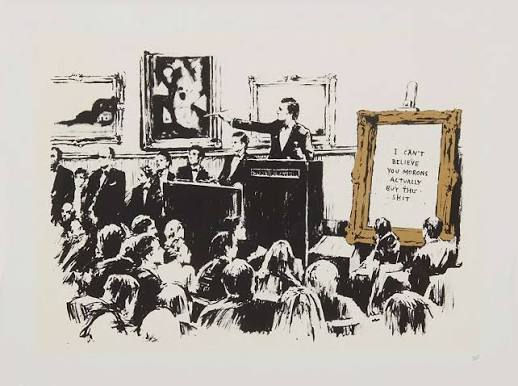
Several claims may exist if an auction house, gallery, private dealer, advisor, or consignor sold valuable artwork with disputed authenticity, provenance, attribution, or title. The strongest claims usually depend on what the seller represented, what the written sale terms disclaim, whether title was actually transferable, and whether expert or provenance evidence supports the dispute. Potential remedies may include rescission, damages, replevin, declaratory judgment, conversion, fraud, breach of warranty, deceptive-trade-practices claims, injunctions, or recovery of the artwork itself.
The answer depends on…
Whether the dispute concerns authenticity, attribution, condition, provenance, title, liens, theft, or consignment authority.
What the auction catalogue, invoice, bill of sale, condition report, provenance statement, and terms of sale said.
Whether the seller made an express warranty or disclaimed warranties.
Whether the seller had good title or only claimed to transfer limited rights.
Whether the buyer relied on expert authentication, catalogue descriptions, certificates, appraisals, or dealer representations.
Whether the artwork is still in the buyer’s possession or has been resold.
Whether the contract requires arbitration, mediation, New York law, Florida law, North Carolina law, or another forum.
Whether emergency relief is needed to prevent resale, export, concealment, or deterioration of the work.
Why art disputes are different from ordinary sales disputes
High-value artwork is not just another commercial good. Its value often depends on facts that may be difficult to prove years later: authorship, provenance, catalogue raisonné treatment, exhibition history, restoration, title history, authenticity opinions, condition, and market acceptance.
That makes the litigation strategy different. A buyer who purchased a painting attributed to a known artist may not simply need a refund. The buyer may need expert testimony, provenance discovery, conservation analysis, auction-house files, dealer communications, title records, insurance materials, and immediate steps to preserve the artwork and prevent further transfer.
Similarly, a collector, estate, lender, consignor, or prior owner may need to act quickly if the artwork was sold without authority or with defective title. Once valuable artwork moves through multiple private sales, storage facilities, intermediaries, or foreign buyers, recovery becomes harder.
Potential claims when authenticity is disputed
If the dispute is about authenticity or attribution, potential claims may include:
Breach of express warranty, if the seller’s description, catalogue entry, invoice, certificate, or statement became part of the basis of the bargain.
Fraud or fraudulent inducement, if the seller knowingly misrepresented authenticity, provenance, condition, or title.
Negligent misrepresentation, if the seller made false statements without reasonable support.
Breach of contract, if the sale agreement promised a particular artist, period, condition, title, or provenance.
Rescission, if the buyer seeks to unwind the transaction and return the work.
Deceptive or unfair trade practices, if the conduct involved misleading commercial practices.
Professional negligence or breach of fiduciary duty, if an art advisor, agent, trustee, executor, or consultant failed to protect the buyer or owner.
Declaratory judgment, if the parties need a court determination of ownership, authenticity-related rights, or contractual obligations.
The buyer’s claim may be stronger if the description was specific: for example, “by [artist],” “signed,” “from the collection of,” “with certificate of authenticity,” “included in catalogue raisonné,” or “unrestored.” The claim may be weaker if the terms of sale made clear that the attribution was only an opinion, heavily disclaimed warranties, imposed a short notice period, or required the buyer to conduct independent due diligence.
Potential claims when title is disputed
Title disputes are different from authenticity disputes. A work can be genuine but still legally problematic if it was stolen, sold without authority, subject to a lien, transferred by a fiduciary without approval, consigned improperly, or caught in an estate, divorce, trust, creditor, or bankruptcy dispute.
Potential title-related claims may include:
Replevin or claim-and-delivery-type relief to recover possession.
Conversion against a party that wrongfully exercised control over the artwork.
Declaratory judgment to determine ownership.
Breach of warranty of title.
Fraudulent transfer or voidable transfer.
Constructive trust.
Injunction to stop resale, export, concealment, or movement of the artwork.
Accounting, especially where an agent, dealer, advisor, trustee, or consignee handled sale proceeds.
Breach of fiduciary duty or breach of consignment agreement.
Practical framework: what to do immediately
1. Preserve every sale document
The first step is to secure the paper trail. That includes:
Auction catalogue entry.
Online listing.
Condition report.
Invoice.
Bill of sale.
Consignment agreement.
Terms and conditions of sale.
Buyer’s premium documents.
Provenance materials.
Certificates of authenticity.
Appraisals.
Emails, texts, and call notes.
Payment records.
Shipping, storage, and insurance documents.
Restoration or conservation records.
Prior sale history.
In art litigation, small wording differences can matter. “Attributed to,” “school of,” “circle of,” “after,” “studio of,” and “by” may carry different legal and market implications.
2. Separate authenticity from title
Authenticity and title should be analyzed separately.
Authenticity asks whether the work is what it was represented to be. Title asks whether the seller had the legal right to transfer ownership. A buyer may have claims if either is defective, but the proof and remedy may differ.
For authenticity, the critical evidence may come from experts, technical analysis, provenance research, catalogue raisonné treatment, pigment testing, signatures, labels, exhibition history, or comparable works.
For title, the critical evidence may come from chain-of-ownership documents, bills of sale, estate records, consignment agreements, lien records, police reports, customs records, insurance claims, or prior owner communications.
3. Review disclaimers and limitation periods
Auction houses and dealers often use detailed terms of sale. Those terms may include:
As-is clauses.
Warranty disclaimers.
Limited authenticity guarantees.
Short deadlines to challenge authenticity.
Requirements for written notice.
Requirements for opinions from recognized experts.
Arbitration or forum-selection clauses.
Choice-of-law clauses.
Limitations on consequential damages.
Restrictions on rescission.
Buyer’s premium and fee provisions.
These provisions do not always defeat a claim, but they can change the litigation posture. A buyer or owner should not wait to review them. Missing a contractual notice deadline can make a strong factual dispute harder to pursue.
4. Obtain qualified expert review
A serious authenticity dispute usually needs more than suspicion. Depending on the work, the owner may need:
A subject-matter art historian.
A catalogue raisonné expert.
A conservator.
A forensic document examiner.
A provenance researcher.
A scientific-testing expert.
A valuation expert.
A market expert.
The expert’s role should be carefully defined. Litigation experts, authentication committees, auction-house specialists, and conservation professionals may serve different functions. Privilege and work-product issues should also be considered before commissioning written reports.
5. Decide whether emergency relief is needed
Emergency relief may be appropriate if the artwork is about to be resold, exported, hidden, altered, damaged, pledged, or moved beyond the court’s practical reach.
Possible emergency requests include:
Temporary restraining order.
Preliminary injunction.
Order preventing transfer or export.
Order preserving the artwork.
Order requiring disclosure of location.
Replevin or claim-and-delivery relief.
Appointment of a receiver or custodian.
Preservation order for records and communications.
Expedited discovery from auction houses, shippers, storage facilities, insurers, or dealers.
The proposed order should be specific. A court is more likely to enter and enforce an order that clearly identifies the artwork, the prohibited conduct, the location, and the preservation obligations.
Deadlines and litigation risks
Art disputes can involve multiple overlapping deadlines:
Contractual authenticity-challenge periods.
UCC notice requirements.
Statutes of limitation for warranty, fraud, contract, conversion, and deceptive-practices claims.
Short deadlines for emergency injunctive relief.
Arbitration deadlines.
Appellate deadlines after injunction rulings.
Discovery deadlines if a lawsuit is already pending.
Insurance notice deadlines.
Consignment or estate-administration deadlines.
The biggest practical risk is delay. If the buyer waits too long, the artwork may be resold, exported, restored, damaged, or placed beyond practical reach. If the seller waits too long, key experts, documents, and provenance evidence may become harder to obtain.
There are also litigation risks. A buyer may face contractual disclaimers, expert disagreement, market uncertainty, authentication committee reluctance, fee-shifting provisions, forum clauses, and difficulty proving reliance. A seller, dealer, or auction house may face reputational exposure, rescission risk, damages, discovery into internal files, and injunctive orders affecting future sale activity.
Evidence that matters
The most important evidence usually falls into five categories:
Transaction evidence: catalogue, invoice, bill of sale, terms, payment records, and communications.
Provenance evidence: prior owners, galleries, exhibitions, estate records, import/export records, and sale history.
Authentication evidence: expert opinions, technical analysis, catalogue raisonné materials, conservation reports, and artist foundation materials.
Title evidence: chain of title, consignment authority, liens, estate documents, trust documents, creditor records, police reports, and prior claims.
Damages evidence: purchase price, buyer’s premium, insurance value, market value if authentic, market value if disputed, restoration costs, carrying costs, and resale impact.
In a serious dispute, the record should be built as if the case may be appealed. Courts reviewing injunctions, summary judgment, or trial rulings will focus on the evidence actually placed in the record, not informal background the parties assumed everyone understood.
Forum and appeal consequences
Forum can be decisive. Auction terms may require litigation or arbitration in a specific jurisdiction. Dealer contracts may include New York, Florida, North Carolina, Delaware, or foreign choice-of-law provisions. Cross-border transactions may raise service, jurisdiction, customs, cultural-property, or enforcement issues.
Injunction orders can also create immediate appeal issues. If a court freezes the artwork, orders it preserved, refuses to stop a sale, or denies emergency relief, the losing side may have limited time to seek appellate review. Florida, North Carolina, and federal courts each have different rules governing appealability, stays, and emergency motions.
That is why art disputes should be evaluated with both trial-court and appellate strategy in mind from the beginning.
Authority block
Key authorities include:
Florida Statutes § 672.312, which recognizes a warranty of good and rightful title in a contract for sale, subject to exclusion or modification in limited circumstances. See Fla. Stat. § 672.312.
Florida Statutes § 672.313, governing express warranties created by affirmation, promise, description, sample, or model. See Fla. Stat. § 672.313.
Florida Statutes § 672.403, addressing power to transfer, good-faith purchase, and entrustment. See Fla. Stat. § 672.403.
Florida Statutes § 501.204, part of the Florida Deceptive and Unfair Trade Practices Act. See Fla. Stat. § 501.204.
N.C. Gen. Stat. § 25-2-312, governing warranty of title and against infringement. See N.C. Gen. Stat. § 25-2-312.
N.C. Gen. Stat. § 25-2-313, governing express warranties by affirmation, promise, description, sample, or model. See N.C. Gen. Stat. § 25-2-313.
N.C. Gen. Stat. § 25-2-403, addressing power to transfer, good-faith purchase, and entrustment. See N.C. Gen. Stat. § 25-2-403.
N.C. Gen. Stat. § 75-1.1, addressing unfair or deceptive acts or practices in or affecting commerce. See N.C. Gen. Stat. § 75-1.1.
Federal Rule of Civil Procedure 65, governing temporary restraining orders and preliminary injunctions in federal court. See Federal Rule of Civil Procedure 65.
How Biazzo Law approaches high-value artwork and asset disputes
Biazzo Law handles selected civil litigation, real estate and property disputes, injunction matters, and appeals in Florida, North Carolina, and federal courts. In an artwork dispute, the firm’s role is to connect the evidence, the contract, the ownership theory, and the remedy.
That means evaluating whether the client needs rescission, damages, recovery of the artwork, emergency preservation, declaratory relief, or appellate protection after an injunction ruling. Biazzo Law’s appellate-aware litigation approach is designed for disputes where the record, written advocacy, expert proof, and remedy selection may determine the outcome.
The firm’s federal/state coverage, injunction readiness, and Supreme Court/amicus lens can be valuable when a high-value asset dispute raises broader questions about title, due process, equitable remedies, market reliance, and the legal treatment of unique property.
Related resources
For broader representation in serious commercial disputes, see Biazzo Law’s Business Litigation service page.
Related articles:
To discuss disputed artwork, title, authenticity, injunctions, or appeal risk, visit Biazzo Law’s contact page.
FAQ
Can a buyer sue if artwork sold at auction turns out not to be authentic?
Possibly. The buyer may have claims for breach of express warranty, breach of contract, fraud, negligent misrepresentation, rescission, or deceptive trade practices. The outcome often depends on the sale description, expert proof, disclaimers, and any contractual deadline for authenticity challenges.
Does an auction house guarantee authenticity?
Not always. Auction houses often provide limited guarantees and broad disclaimers. Some descriptions may be treated as opinion, while others may create express warranties. The specific catalogue language and terms of sale must be reviewed carefully.
What if the artwork is authentic but the seller did not have good title?
That may support title-based claims, including breach of warranty of title, replevin, conversion, declaratory judgment, constructive trust, or injunctive relief. The analysis may turn on chain of title, entrustment, consignment authority, theft, liens, and good-faith purchaser rules.
Can a court stop artwork from being resold or exported?
Yes, in the right case. If the artwork is unique, title is disputed, and there is a risk of resale, concealment, export, or loss, a court may consider temporary injunctive relief or preservation orders. The requesting party must provide a specific factual and legal basis.
What evidence is most important in an art authenticity dispute?
The most important evidence usually includes the sale documents, catalogue description, provenance file, expert opinions, technical analysis, conservation records, prior sale history, and communications between the buyer, seller, dealer, auction house, and advisors.
What if the auction terms require arbitration or another state’s law?
Forum-selection, arbitration, and choice-of-law clauses can be important. They may affect where the case is filed, what law applies, how quickly relief can be sought, and whether emergency court relief is still available before arbitration.
Can a seller or dealer rely on an “as is” disclaimer?
Sometimes, but not always. A disclaimer may limit warranty claims, but it may not defeat every claim, especially if there are specific factual representations, fraud allegations, title defects, or statutory claims. The exact language matters.
Should the buyer return the artwork before filing suit?
Not without a strategy. Returning, storing, transferring, or altering the artwork can affect leverage and evidence. The buyer should preserve the work, maintain insurance, avoid restoration or modification, and obtain legal guidance before taking action.
Schedule a litigation strategy review
If valuable artwork was sold with disputed authenticity, provenance, attribution, or title, the next step should be deliberate and fast. Schedule a litigation strategy review with Biazzo Law to evaluate claims, evidence, forum issues, emergency injunction options, and appeal consequences before the artwork or record becomes harder to protect.


Comments