Can a Homeowners’ Association Enforce a Restrictive Covenant That Was Ignored for Years? Florida and North Carolina HOA Litigation
- Corey J. Biazzo, Esq.
- 1 day ago
- 9 min read
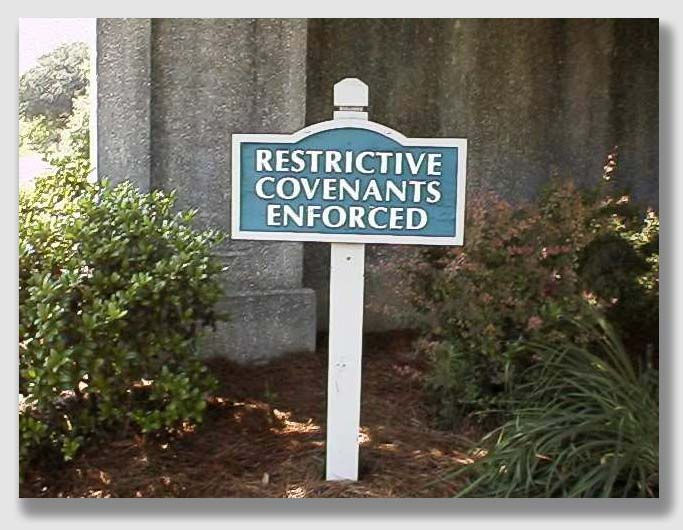
Yes, a homeowners’ association may still be able to enforce a restrictive covenant even if it was ignored for years, but delay can create serious defenses. The result depends on whether the HOA merely failed to enforce occasionally, or whether the pattern of nonenforcement was so widespread, selective, prejudicial, or inconsistent that enforcement would be unfair or legally barred.
The answer depends on:
whether the covenant is valid, recorded, and still enforceable;
whether the HOA’s governing documents authorize enforcement;
whether similar violations were ignored across the community;
whether the HOA selectively enforced the covenant against one owner;
whether owners relied on years of nonenforcement;
whether delay caused prejudice, expense, or changed property conditions;
whether the violation is continuing or completed;
whether Florida or North Carolina statutory procedures were followed;
whether the HOA is seeking fines, an injunction, damages, attorney’s fees, or architectural compliance.
Why Old Nonenforcement Does Not Automatically End HOA Authority
A restrictive covenant can remain enforceable even if the HOA has not enforced it consistently in the past. Associations sometimes overlook violations, change boards, lack records, or decide to restart enforcement after years of relaxed administration.
But an HOA cannot always revive enforcement without consequences. If a covenant has been ignored for years, the owner may argue waiver, abandonment, selective enforcement, estoppel, laches, acquiescence, or unfair prejudice.
That is why these disputes are fact-intensive. The question is not simply “Has the HOA enforced this rule before?” The better question is “Has the HOA’s conduct made enforcement of this covenant against this owner legally or equitably unfair?”
Practical Framework: How to Analyze the Covenant
1. Read the Governing Documents First
The analysis starts with the recorded declaration, covenants, bylaws, rules, architectural guidelines, amendments, and board resolutions.
Key questions include:
What exactly does the covenant prohibit?
Is the language clear or ambiguous?
Does it apply to the owner’s property?
Was the covenant properly recorded?
Has it been amended or preserved?
Does the HOA have enforcement authority?
Are there architectural review procedures?
Are fines, suspension, injunctions, or attorney’s fees authorized?
Does the governing document contain a non-waiver clause?
A non-waiver clause can help the HOA argue that prior nonenforcement does not prevent later enforcement. But even a non-waiver clause may not eliminate all defenses if the enforcement history is extreme or unfair.
2. Determine Whether the Covenant Is Still Valid
In older communities, especially in Florida, the covenant’s continued validity may require separate review. Florida’s Marketable Record Title Act can affect older covenants unless they were properly preserved or revitalized. Florida Chapter 720 also includes preservation provisions for homeowners’ associations.
In North Carolina, the analysis may involve the recorded declaration, amendments, planned community documents, and the scope of the association’s statutory and contractual powers.
Before fighting over enforcement history, confirm that the covenant still exists and applies.
3. Compare Similar Violations
The most important evidence in ignored-covenant cases is often neighborhood-wide comparison evidence.
For example:
How many similar fences, sheds, signs, vehicles, rentals, additions, exterior colors, parking practices, or landscaping changes exist?
Did the HOA know about them?
Did the HOA approve them?
Did the HOA fine some owners but ignore others?
Did the HOA send violation letters and then abandon enforcement?
Did board members have similar violations?
Did the HOA treat older violations differently from newer ones?
Did the HOA announce a prospective enforcement reset?
A few isolated violations may not defeat enforcement. Widespread, long-term, obvious violations may create a stronger abandonment or waiver argument.
4. Separate Waiver From Selective Enforcement
These defenses overlap but are not identical.
Waiver focuses on whether the HOA’s conduct showed an intentional relinquishment of enforcement rights.
Abandonment focuses on whether the covenant has been so widely disregarded that it no longer serves its original purpose.
Selective enforcement focuses on unequal treatment. The owner argues that the HOA is enforcing the rule against one owner while ignoring materially similar violations by others.
Laches focuses on unreasonable delay plus prejudice. The owner argues that the HOA waited too long and the delay caused harm.
Estoppel focuses on reliance. The owner argues that the HOA’s conduct or statements led the owner to act, spend money, or change position.
A strong defense often combines several of these theories, supported by documents, photos, board records, and witness testimony.
Deadlines and Procedural Requirements
Florida
In Florida homeowners’ association disputes, covenant enforcement disputes between an association and parcel owner are often subject to presuit mediation under Florida Statutes section 720.311 before litigation. Emergency temporary injunctive relief may be sought without first completing presuit mediation, but the court may later require mediation after emergency issues are resolved.
If the HOA seeks fines or suspension of rights, Florida Statutes section 720.305 includes notice and hearing procedures. The association generally must provide written notice, an opportunity for a hearing before a proper committee, and written notice of the committee’s findings.
Florida deadlines can also arise from statutes of limitation, architectural-review deadlines, board appeal procedures, settlement agreements, and injunction proceedings.
North Carolina
In North Carolina planned communities, association powers often come from the declaration and Chapter 47F. North Carolina General Statutes section 47F-3-102 gives associations powers that may include regulating common areas, enforcing covenants, imposing charges for late payment, and imposing reasonable fines or suspensions after notice and opportunity to be heard.
North Carolina General Statutes section 47F-3-107.1 provides procedures for fines and suspension of planned community privileges or services unless the declaration provides a specific procedure. The owner must receive notice of the charge, an opportunity to be heard, and notice of the decision. If an adjudicatory panel imposes a fine or suspension, the owner may appeal to the full executive board within 15 days after the decision.
Evidence That Matters
For the HOA, useful evidence may include:
the recorded declaration and amendments;
architectural guidelines;
board minutes;
violation letters;
photographs of the owner’s violation;
notice and hearing records;
records showing consistent enforcement;
prior approval or denial decisions;
evidence of community standards;
proof of harm to the neighborhood or other owners;
non-waiver provisions;
testimony from board members or managers.
For the owner, useful evidence may include:
photos of similar violations;
dates showing how long the HOA ignored the issue;
emails or letters from the HOA;
proof of HOA knowledge;
architectural approvals given to other owners;
board minutes showing nonenforcement;
witness statements from neighbors;
proof of money spent in reliance on nonenforcement;
evidence that the violation existed before purchase;
closing documents, disclosures, or estoppel letters;
evidence that the HOA targeted the owner for improper reasons.
The stronger side is usually the side that can show a clear timeline.
Forum: Where Is the Dispute Heard?
HOA covenant disputes may begin with internal HOA procedures, architectural review, fine hearings, presuit mediation, or board appeals. If those steps do not resolve the dispute, the case may proceed in state court.
Federal court is less common but may be possible if there is diversity jurisdiction, federal claims, or other jurisdictional grounds. However, most restrictive covenant disputes are state-law property and contract disputes.
The forum matters because it affects deadlines, available remedies, fee exposure, injunction standards, and appeal routes.
Remedies and Risks
An HOA may seek:
compliance with the covenant;
removal of an improvement;
architectural correction;
fines;
suspension of privileges;
damages;
injunction;
attorney’s fees and costs.
An owner may seek:
declaration that the covenant is unenforceable;
declaration that enforcement is waived, abandoned, selective, or barred;
injunction against improper enforcement;
defense to fines;
attorney’s fees where authorized;
appellate review if the court grants or denies injunctive relief.
The biggest risk for both sides is fee exposure. HOA disputes can become expensive quickly, especially when the governing documents or statutes allow prevailing-party attorney’s fees.
Appeal Consequences
Restrictive covenant cases often turn on injunctions, final judgments, and equitable defenses. That makes appellate planning important.
If a court grants an injunction requiring an owner to remove an improvement or stop using property in a certain way, appellate counsel should evaluate whether a stay is available and whether immediate review is possible.
If a court denies enforcement after finding waiver, abandonment, selective enforcement, or laches, the HOA may need to preserve legal and factual issues for appeal.
If the case turns on ambiguous covenants, standard of review can matter. If the case turns on credibility, factual findings, or equitable discretion, appellate review may be more deferential.
That is why the hearing record should be built with appeal consequences in mind.
Practical Takeaways
For homeowners:
Do not ignore a violation letter just because the HOA ignored others.
Gather photos and proof of similar violations.
Preserve emails, approvals, board communications, and reliance evidence.
Check whether the HOA followed notice, hearing, mediation, and appeal procedures.
Evaluate fee exposure before escalating the dispute.
For HOAs:
Do not assume years of silence are harmless.
Document why enforcement is restarting.
Treat similar violations consistently.
Consider prospective enforcement policies.
Follow statutory and governing-document procedures exactly.
Build evidence showing the covenant still serves a real community purpose.
Authority Block
Florida Statutes Chapter 720 governs Florida homeowners’ associations. Source: Florida Statutes Chapter 720.
Florida Statutes section 720.305 authorizes actions at law or in equity to redress failure or refusal to comply with Chapter 720, governing documents, and association rules, and addresses fines, suspensions, notice, hearings, and attorney’s fees. Source: Fla. Stat. § 720.305.
Florida Statutes section 720.311 governs dispute resolution and presuit mediation for many HOA covenant enforcement disputes, with an emergency-relief exception. Source: Fla. Stat. § 720.311.
Florida’s Marketable Record Title Act appears in Chapter 712 and may require analysis for older recorded covenants. Source: Florida Statutes Chapter 712.
Florida Statutes section 720.3032 addresses notice of association information and preservation from the Marketable Record Title Act. Source: Fla. Stat. § 720.3032.
North Carolina’s Planned Community Act is Chapter 47F. Source: North Carolina Chapter 47F.
North Carolina General Statutes section 47F-3-102 identifies powers of owners’ associations. Source: N.C. Gen. Stat. § 47F-3-102.
North Carolina General Statutes section 47F-3-107.1 governs procedures for fines and suspension of planned community privileges or services, including notice, opportunity to be heard, and a 15-day appeal to the executive board from an adjudicatory panel decision. Source: N.C. Gen. Stat. § 47F-3-107.1.
How Biazzo Law Approaches HOA Covenant Enforcement Disputes
Biazzo Law approaches HOA covenant disputes with trial and appellate strategy in mind. These cases often look simple at first: a covenant says one thing, and an owner did another. But the real dispute may turn on years of enforcement history, board discretion, procedural defects, emergency injunction practice, fee exposure, and appeal risk.
Biazzo Law can evaluate Florida and North Carolina HOA disputes from both sides of the case, including:
covenant interpretation;
selective enforcement;
waiver and abandonment;
laches and estoppel;
presuit mediation;
injunction readiness;
evidentiary hearings;
appellate preservation;
stay strategy;
fee exposure;
potential state or federal appellate review.
The firm’s appellate-aware litigation approach is especially useful when a covenant dispute may lead to an injunction, appeal, or broader issue affecting community governance.
FAQ
Can an HOA enforce a covenant after ignoring it for years?
Sometimes. Years of nonenforcement can create defenses, but it does not automatically eliminate the HOA’s authority. The result depends on the covenant, enforcement history, comparable violations, reliance, and prejudice.
What is selective enforcement in an HOA dispute?
Selective enforcement means the HOA is enforcing a rule against one owner while ignoring materially similar violations by others. The strength of the defense depends on how similar the other violations are and whether the HOA had knowledge of them.
What is abandonment of a restrictive covenant?
Abandonment occurs when violations are so widespread and substantial that the covenant no longer serves its intended purpose. A few isolated violations usually are not enough.
Does Florida require presuit mediation for HOA covenant disputes?
Often, yes. Florida Statutes section 720.311 requires presuit mediation for many covenant enforcement disputes, but emergency temporary injunctive relief may be sought before mediation.
Can a North Carolina HOA fine an owner for a covenant violation?
Yes, if authorized and if required procedures are followed. Under section 47F-3-107.1, the owner generally must receive notice of the charge, an opportunity to be heard, and notice of the decision unless the declaration provides a specific procedure.
Can an HOA get an injunction to force compliance?
Possibly. An HOA may seek equitable relief if the covenant is enforceable and the facts support an injunction. The owner may oppose based on waiver, selective enforcement, laches, hardship, ambiguity, or procedural defects.
Can a homeowner recover attorney’s fees?
Possibly. Fee recovery depends on the statute, governing documents, contract language, and who prevails. Florida section 720.305 includes prevailing-party fee provisions in certain HOA litigation.
Should appellate counsel be involved before the injunction hearing?
Yes, especially if the case may involve removal of improvements, emergency relief, stays, or appealable injunction orders. The trial record should be built with appellate review in mind.
Internal Links
Parent service page: Business Litigation
Related blog posts:
Contact page: Contact Biazzo Law
Schedule a Litigation Strategy Review
If an HOA is trying to enforce a restrictive covenant that was ignored for years, or if your association needs to restart enforcement without creating avoidable legal risk, timing and evidence matter. Schedule a litigation strategy review with Biazzo Law to evaluate covenant enforceability, waiver, selective enforcement, injunction strategy, fee exposure, and appeal consequences.


Comments