
Federal Protest Prosecution Dismissed With Prejudice After Judge Finds Serious Grand Jury Misconduct Concerns
Updated: Jul 23
By Biazzo Law, PLLC
June 5, 2026
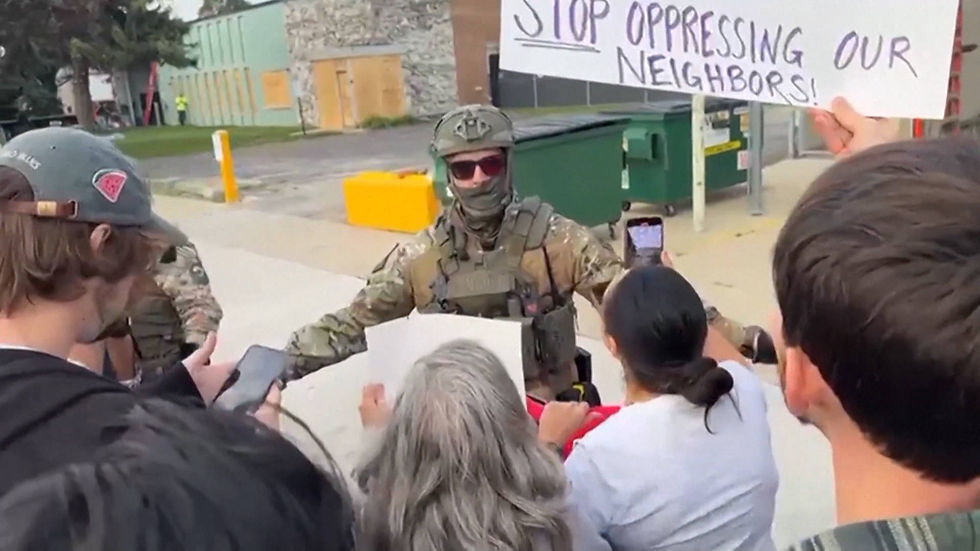
A federal criminal prosecution arising from a protest outside an Immigration and Customs Enforcement facility in Broadview, Illinois ended in extraordinary fashion: the United States dismissed the remaining charges with prejudice after the Court reviewed unredacted grand jury transcripts and identified serious concerns about how prosecutors handled the grand jury.
The case, United States v. Rabbitt, et al., involved six defendants initially charged in connection with a September 26, 2025 protest near the Broadview Service Staging Area, an ICE facility in the Northern District of Illinois.
The indictment charged all six defendants with a felony conspiracy under 18 U.S.C. § 372 and charged each defendant separately with forcibly impeding, intimidating, and interfering with a federal officer under 18 U.S.C. § 111(a)(1) and 18 U.S.C. § 2.
But the case did not end with a jury verdict.
It ended after the Court found serious grand-jury irregularities, questioned redactions made by prosecutors, vacated the trial date, and raised potential issues of prosecutorial misconduct, ethical violations, lack of candor to the Court, and vindictive prosecution.
The government then dismissed the remaining charges with prejudice.
This case is constitutionally unsettling. It raises urgent questions about grand jury independence, prosecutorial ethics, public transparency, protest rights, due process, and the need for meaningful government oversight.
Quick Answer: What Happened?
The federal government indicted several individuals after a protest near the Broadview ICE facility.
The most serious charge was a felony conspiracy under 18 U.S.C. § 372, a rarely used federal statute that prohibits conspiracies to prevent federal officers from discharging their duties by force, intimidation, or threat.
The defense challenged the government’s shifting theory of the felony conspiracy charge and asked to see how prosecutors instructed the grand jury on the law.
After reviewing the grand jury transcripts, Judge April M. Perry found problems far more serious than legal-instruction issues. The Court identified concerns involving improper prosecutorial vouching, improper substantive communications with grand jurors outside the grand jury room, excusing grand jurors who disagreed with the government’s case from the deliberation process, and redactions that hid those issues from the Court.
The trial was vacated. The hearing transcript was unsealed in the interest of public accountability. The U.S. Attorney then moved to dismiss the remaining charges with prejudice.
In plain English: the prosecution collapsed after the Court saw what happened in the grand jury.
The Broadview ICE Protest and the Indictment
The indictment alleged that on September 26, 2025, an ICE agent identified as “Agent A” was driving a government vehicle to the Broadview Service Staging Area to report for official duties.
According to the indictment, protesters surrounded the government vehicle, banged on windows and body panels, pushed against the vehicle, scratched the word “PIG” into the vehicle, broke a side mirror, and broke a rear windshield wiper.
The government charged all six defendants with felony conspiracy under 18 U.S.C. § 372. It also charged each defendant individually under 18 U.S.C. § 111(a)(1), which prohibits forcibly assaulting, resisting, opposing, impeding, intimidating, or interfering with certain federal officers while they are engaged in official duties.
The case was highly sensitive from the beginning because it sat at the intersection of immigration enforcement, public protest, federal prosecutorial discretion, and First Amendment activity.
The Defense’s View: A Protest Became a Federal Spectacle
The defense painted a very different picture.
According to defense filings, the defendants traveled to the Broadview facility to protest what they described as well-documented abuses by ICE agents in the Chicago area and elsewhere.
The defense alleged that Agent A drove a black SUV into a crosswalk full of protesters, causing panic and confusion. They also asserted that the agent did not stop to allow people to move out of the vehicle’s path.
The defense further argued that the government had conceded none of the remaining defendants caused damage to Agent A’s vehicle and that none of them had criminal histories.
From the defense’s perspective, the case was not ordinary law enforcement. It was an aggressive federal prosecution against protesters during a period of intense public scrutiny over immigration enforcement.
Why the Felony Conspiracy Charge Mattered
The felony conspiracy charge under 18 U.S.C. § 372 became the center of the case.
That statute is not commonly used in ordinary protest prosecutions. The defense argued that, based on its research, the U.S. Attorney’s Office for the Northern District of Illinois had never before used § 372 in its more than 150-year history.
That matters because unusual charging decisions require careful scrutiny.
The grand jury is supposed to serve as an independent constitutional buffer between the government and the citizen. When prosecutors use a rare felony statute against protesters, the public has a strong interest in knowing whether the grand jury was properly instructed, whether it understood the legal standard, and whether it acted independently.
The Defense Asked a Basic Question: What Did Prosecutors Tell the Grand Jury?
As the case progressed, the government narrowed and changed its theory of the § 372 conspiracy charge.
The defense then asked to see the grand jury materials showing how prosecutors instructed the grand jury on the law.
That request was narrow. The defense was not asking for all witness testimony. It wanted the legal instructions and related colloquy concerning the felony conspiracy charge.
The concern was simple: if the government’s legal theory kept changing after indictment, what exactly did the grand jury vote on?
That question became the beginning of the prosecution’s unraveling.
The Court’s Review of the Grand Jury Transcripts
Judge Perry initially reviewed redacted grand jury materials in camera.
At first, the issue appeared to involve possible legal-instruction problems. The Court later stated that it identified some infirmities in the legal instructions given during the first grand jury appearance, although those issues appeared to have been corrected by the final appearance at which the indictment was returned.
But then the Court noticed something more troubling: the materials provided to the Court had redactions within the prosecutor-grand juror colloquy.
That is highly significant. In camera review depends on trust. When a judge privately reviews sensitive materials, the Court relies on the government to provide a complete and accurate record unless the Court expressly authorizes redactions.
Judge Perry ordered the government to produce unredacted materials.
After reviewing the unredacted transcripts, the Court found far more serious problems.
The Court Identified Serious Grand Jury Problems
At the May 21, 2026 hearing, Judge Perry stated that the unredacted transcripts revealed “significantly bigger problems” than grand jury misinstructions.
The Court identified several concerns.
First, the Court saw improper prosecutorial vouching. That means a prosecutor appeared to place personal credibility and trustworthiness behind the charges.
Second, the Court saw improper substantive communications with grand jurors outside the grand jury room.
Third, the Court saw the prosecutor excusing grand jurors who disagreed with the government’s case from the deliberation process.
Fourth, and most troubling to the Court, those problems had been redacted out of the versions initially given to the judge.
That last point is critical.
The issue was not merely that mistakes may have occurred in the grand jury. Mistakes can happen. The deeper problem was that the Court believed the redactions concealed the very conduct the Court needed to evaluate.
Judge Perry stated that trust had been broken.
Why the Redactions Were So Troubling
The justice system depends heavily on candor from prosecutors.
Prosecutors are not ordinary advocates. They represent the United States. Their duty is not simply to win; it is to do justice.
That duty becomes even more important in the grand jury context because the defense is generally not present. Grand jurors rely almost entirely on prosecutors to explain the law, present evidence fairly, and preserve the grand jury’s independence.
If prosecutors misstate the law, pressure grand jurors, vouch for the case, exclude dissenting grand jurors, or communicate substantively outside proper proceedings, the constitutional role of the grand jury can be compromised.
If prosecutors then redact those issues from materials shown to the Court, the problem becomes even more serious.
That is why this case is constitutionally unsettling.
It raises the possibility that the grand jury was not functioning as an independent constitutional check, but instead was being steered toward the result the government wanted.
The Court Raised Possible Sanctions, Ethics, Candor, and Vindictive Prosecution Issues
Judge Perry did not immediately decide every issue. But she made clear that the newly discovered grand
jury problems changed the case.
The Court raised several possible consequences:
dismissal based on prosecutorial misconduct;
potential dismissal with prejudice;
possible sanctions;
possible ethical violations;
lack of candor to the Court; and
renewed vindictive prosecution concerns.
The vindictive prosecution issue is especially important in a protest case.
Vindictive prosecution occurs when the government brings or maintains charges to punish a person for exercising legal rights. Selective prosecution occurs when the government targets someone based on impermissible considerations.
The Court had previously rejected certain defense arguments because there had not been sufficient evidence of improper purpose. But after reviewing the unredacted grand jury transcripts, the Court stated that the calculus had changed considerably.
The Trial Was Vacated
The case had been scheduled for trial within days.
After the Court summarized the grand jury problems, defense counsel requested additional time to review the materials and file motions. The trial date was vacated.
That was a major turning point.
Before the hearing, the case was heading toward trial on misdemeanor charges. After the hearing, the case became a larger fight over grand jury integrity, prosecutorial misconduct, public transparency, and whether the prosecution could proceed at all.
The Court Unsealed the Hearing Transcript
Media organizations sought access to the hearing. The Court initially sealed the proceeding because jury selection was only days away and public disclosure could have affected the defendants’ right to a fair trial.
After the trial date was vacated, that concern diminished.
The Court then unsealed the hearing transcript, with limited redactions for grand jurors’ personal opinions.
Judge Perry explained that citizens have a right to understand how their government is functioning. When government does not function properly, the public has a right to know.
That principle is essential.
Grand jury secrecy is important. But it is not a license for misconduct. It is not a shield for prosecutors to hide constitutional problems. And it does not override every public interest in transparency, especially where the issue is not witness testimony or private evidence, but the conduct of government lawyers.
The Government Dismissed the Remaining Charges With Prejudice
After the Court ruled that the hearing transcript would be unsealed, U.S. Attorney Andrew Boutros moved to dismiss the remaining information with prejudice.
The Court granted the request.
A dismissal with prejudice is final. It means the government cannot simply refile the same charges.
The U.S. Attorney stated that he did not believe prosecutors intentionally misled the Court. He also stated that once he learned of certain issues, the office moved to dismiss the indictment and later proceeded by misdemeanor information. He explained that he had been unaware of some conduct until reviewing the grand jury transcripts and that he was upset by what he saw.
Those statements matter. They show that the U.S. Attorney attempted to place his office’s position on the record and deny intentional misconduct.
But the bottom line remains: the prosecution ended permanently after the Court identified serious grand jury and redaction problems.
Why This Is Constitutionally Unsettling
This case is unsettling for several reasons.
First, it involved protesters. Criminal charges against protesters require special care because prosecution can chill First Amendment activity, even when the government insists it is prosecuting conduct rather than speech.
Second, it involved a rare felony conspiracy statute. When the government uses an unusual felony theory in a politically charged protest context, courts should carefully examine whether the legal theory was properly presented to the grand jury.
Third, it involved the grand jury. The grand jury is supposed to protect citizens from unfounded prosecutions. If grand jurors were misinstructed, pressured, or steered away from dissent, that constitutional function is undermined.
Fourth, it involved redactions from the Court. When prosecutors submit materials to a judge for private review, the Court must be able to trust that the record is complete and fair.
Fifth, it ended only after judicial scrutiny. Without defense persistence and judicial review, the public may never have learned that the grand jury process contained serious problems.
That is why this case should concern everyone, regardless of political affiliation or views on immigration enforcement.
The Grand Jury Is Not a Rubber Stamp
The Fifth Amendment requires federal felony charges to be initiated by grand jury indictment.
That requirement exists for a reason. The grand jury is meant to stand between the prosecutor and the accused. It is supposed to decide independently whether probable cause exists.
But the grand jury can perform that function only if prosecutors respect its independence.
If prosecutors use their authority to pressure grand jurors, misstate the law, vouch for the charges, exclude dissenting voices, or hide problematic interactions from judicial review, the grand jury becomes less of a constitutional safeguard and more of a procedural formality.
That is exactly what the Constitution is designed to prevent.
Prosecutors Have a Higher Duty
A prosecutor’s job is not merely to convict.
A prosecutor’s job is to seek justice.
That duty requires candor, fairness, restraint, and respect for constitutional limits. It also requires special care when prosecuting people engaged in protest activity, political speech, or public opposition to government policy.
Even when protesters cross legal lines, prosecution must be based on evidence and law, not retaliation, viewpoint discrimination, or a desire to send a political message.
The public must be able to trust that federal prosecutors are using criminal law neutrally.
This case damaged that trust.
Why Government Oversight Matters
This case is exactly why government oversight matters.
Without defense motions, the grand jury transcripts might never have been reviewed.
Without judicial scrutiny, the redactions might never have been discovered.
Without press intervention, the public might never have learned what happened.
Without transparency, the prosecution could have continued under a cloud of hidden irregularities.
The Biazzo Law Government Oversight Program exists to promote constitutional accountability, transparency, and public understanding of government power.
Government oversight is not partisan. It is not anti-law enforcement. It is not anti-prosecution.
It is pro-Constitution.
It asks whether public officials are acting within lawful limits. It asks whether courts are being told the truth. It asks whether prosecutors are respecting due process. It asks whether citizens can protest government action without being targeted through extraordinary criminal theories.
Those questions are essential in a constitutional republic.
The Public Has a Right to Know
Judge Perry’s decision to unseal the hearing transcript reflects a basic democratic principle: the public has a right to understand how the government is using its power.
Grand jury secrecy protects important interests, including witness privacy, deliberative freedom, and the integrity of investigations. But secrecy must not become a tool for shielding government misconduct from public view.
When the issue is the conduct of prosecutors, not the substance of witness testimony, transparency becomes especially important.
This case demonstrates why.
A Warning for Future Protest Prosecutions
The dismissal of this case should serve as a warning.
Federal prosecutors should be extremely cautious before using rare felony conspiracy statutes against protesters. They should be especially cautious when the prosecution arises from politically charged events involving immigration enforcement, public demonstrations, and federal agents.
The Constitution permits prosecution of actual crimes. It does not permit prosecutors to transform protest activity into a felony spectacle without strict adherence to law, ethics, and grand jury independence.
When the government charges protesters, it must do so with clean hands.
Key Takeaway
The Broadview protest prosecution ended not because a jury decided the facts, but because the Court discovered serious problems in the grand jury process and the government dismissed the case with prejudice.
That is a major government oversight moment.
It reminds us that constitutional rights depend on enforcement. The First Amendment, Fifth Amendment, Sixth Amendment, and grand jury protections mean little if prosecutors can stretch rare statutes, steer grand juries, hide irregularities, and proceed until someone forces disclosure.
The Constitution requires more.
Federal power must be exercised lawfully. Prosecutors must be candid. Grand juries must remain independent. Courts must be able to inspect government conduct. And the public must remain informed.
That is why Biazzo Law will continue to monitor cases involving prosecutorial misconduct, government overreach, constitutional accountability, and the lawful limits of federal power.
Frequently Asked Questions
What was United States v. Rabbitt about?
The case arose from a September 26, 2025 protest near the Broadview ICE facility in Illinois. The government charged several defendants with felony conspiracy under 18 U.S.C. § 372 and individual counts under 18 U.S.C. § 111(a)(1).
What is 18 U.S.C. § 372?
Section 372 prohibits conspiracies to prevent federal officers from discharging their duties by force, intimidation, or threat, or to injure them or their property because of their official duties.
Why was the felony conspiracy charge controversial?
The defense argued that § 372 was a rare and novel charge in the Northern District of Illinois and that using it against protesters raised serious constitutional and public-interest concerns.
What did the defense request?
The defense requested disclosure of the grand jury transcripts showing how prosecutors instructed the grand jury on the law governing the felony conspiracy charge.
What did the Court find?
After reviewing unredacted grand jury transcripts, the Court identified serious concerns, including improper prosecutorial vouching, improper substantive communications with grand jurors outside the grand jury room, excusing dissenting grand jurors from deliberations, and redactions that concealed those issues from the Court.
Did the Court find intentional prosecutorial misconduct?
The Court raised serious concerns about prosecutorial behavior, redactions, candor, ethics, and possible sanctions. The U.S. Attorney denied that prosecutors intentionally misled the Court.
What does dismissal with prejudice mean?
Dismissal with prejudice means the government cannot refile the same charges in that case. It is a final dismissal.
Why does this case matter constitutionally?
The case implicates grand jury independence, due process, prosecutorial ethics, First Amendment protest rights, public access to court proceedings, and the need for transparency when the government uses criminal law against protesters.
What is the role of government oversight?
Government oversight ensures that public officials, including prosecutors and federal agents, act within constitutional limits. It helps expose misconduct, protect rights, and preserve public trust in the rule of law.
Is this legal advice?
No. This article is for public education and general legal analysis only. It does not create an attorney-client relationship and should not be relied upon as legal advice.


Comments